Dog Harness Ad Guide: Buyer Doubts, Triggers and Hooks
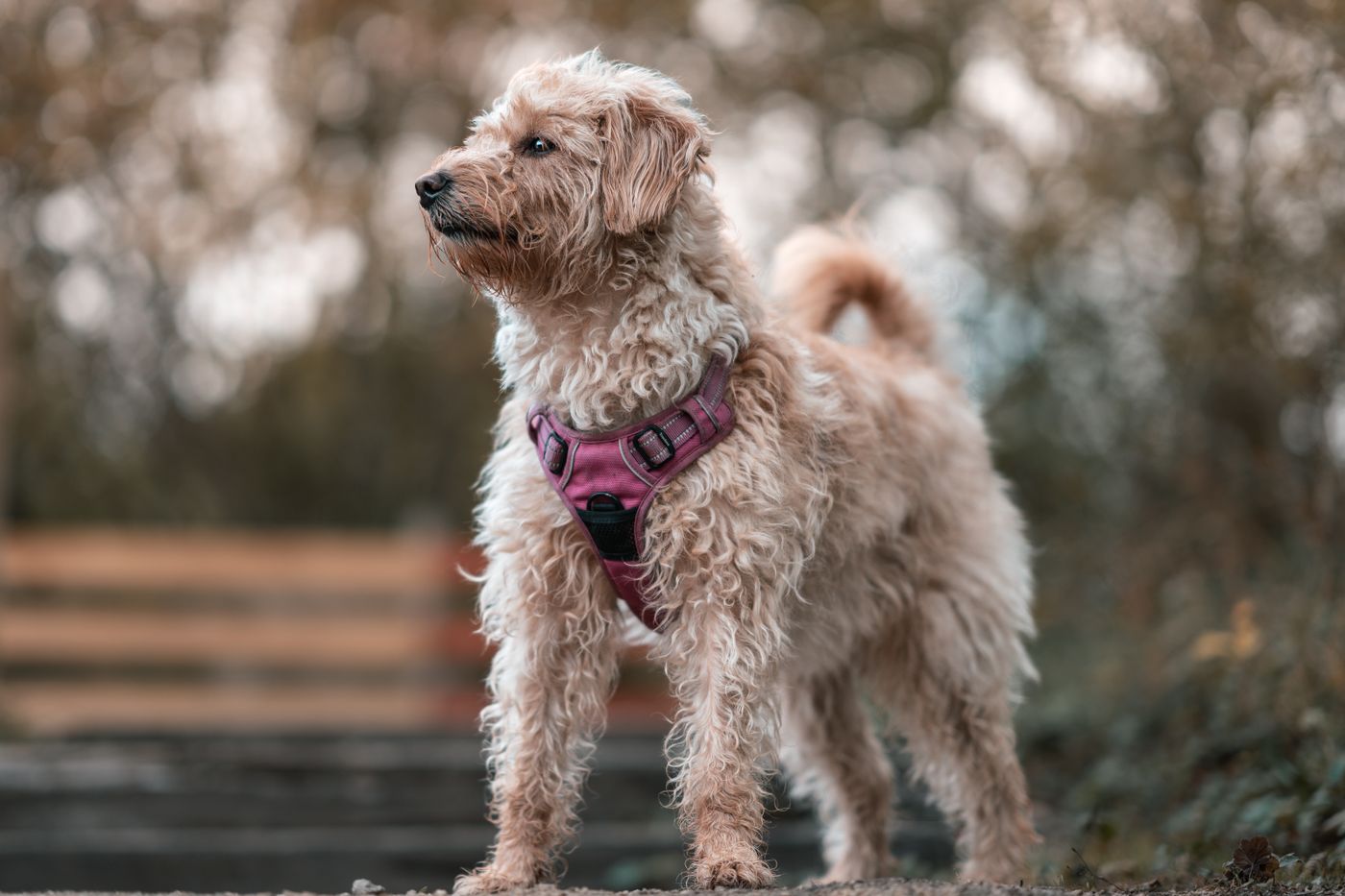
You launch a dog harness ad with a clean product spin, a happy dog sitting in a studio, and the words “no-pull” across the screen. The next clip shows a dog dragging its handler down a sidewalk. Comments ask whether the harness stops escapes, and clicks don't turn into orders.
That gap is the niche. Buyers have already heard the promise. They want to see what happens when a dog backs up, lunges toward another dog, or pulls hard near a street. A calm pose doesn't answer those questions.
This guide draws on 6,672 buyer conversations, reviews and searches. You'll see who buys, what they doubt, which moments prompt a search, and eight hooks you can test with footage that proves how the harness works.
Why good-looking dog harness ads still miss
A dog harness is bought for peace of mind on the walk, not for a polished product shot. A close call near traffic, a hard yank, or a vet's advice to stop using a collar can push an owner to shop. Underneath that urgency sit three worries: their dog could get hurt, get loose, or keep pulling despite the purchase.
“No-pull” can make a skeptical buyer more wary, especially if an earlier harness didn't change the walk. Show the front clip turning the dog's body on a real lunge. Show the fit staying snug when the dog backs up. Show where the straps sit across the chest and whether the shoulders can move.
Four buyers worth targeting first
The report maps ten buyer groups. Start with these four: each has a specific problem you can show in a short video, with a different proof shot for each.
The escape artist's owner
The dog has slipped a collar or harness and bolted. Now a gate, busy street or open patch of ground can make every walk tense.
Ad angle: film the dog backing up and wriggling, then show the snug fit and secondary safety connection holding. Don't promise a dog can never escape.
The puppy parent
They're learning leash walks as the puppy grows out of gear quickly. They want adjustment points and a gentle, low-stress way to get started.
Ad angle: show a person adjusting the straps, fitting the harness, and pairing it with a treat before a calm first walk.
The hard-to-fit small-dog owner
The dog is tiny, narrow or long-bodied, and standard gear looks bulky or slips around. The buyer needs real XS or XXS sizing, not a big harness shrunk down.
Ad angle: put a measuring tape beside the dog, then show the harness scaled to its chest rather than covering the body.
The big, strong puller owner
A heavy puller can yank the handler off balance. The owner wants control without choking the dog and needs hardware that looks ready for a strong lunge.
Ad angle: show a front clip redirecting the dog's body, then close in on reinforced buckles and the lift handle.
The doubts to answer on camera
Each doubt below has a visual answer. If the buyer has already had a bad experience, a caption that says “secure” won't be enough. Let them see the feature working.
| What the buyer thinks | What to show on camera |
|---|---|
| “My dog will back out and get loose.” | Show a controlled backing-up and twisting test, snug adjustments, and the secondary safety clip. |
| “Another no-pull harness won't stop this.” | Film a real lunge, then show the front clip turning the dog's body. Pair it with a simple leash-training tip. |
| “I won't know which size to order.” | Show where to measure the chest and neck, the size chart, and how to adjust the straps for a close fit. |
| “The harness will rub or hold the shoulders back.” | Close up the padded edges and Y-shape, then show the dog reaching, climbing steps and moving freely. |
| “The buckle could pop when my dog lunges.” | Show metal hardware and reinforced stitching close up, then film a controlled pull demonstration. |
Use the product's actual features. If it doesn't have a second safety point or a front clip, don't imply that it does. A close-up of the fit and movement is still stronger than an unsupported claim.
The moments that start a purchase
Owners often start shopping after something changes. Name that situation in the opening line, then show the relevant feature before the viewer scrolls away.
- A slip-out or close call. Show a dog backing away near a gate, then demonstrate the harness fit and safety connection.
- A vet says to switch off the collar. Show the straps distributing pressure across the chest rather than pulling at the throat.
- The puppy outgrows its gear. Show the adjustment points moving as the owner checks the fit.
- A trainer suggests a front clip. Demonstrate the clip steering a pulling dog, rather than relying on “no-pull” text alone.
- A rescue dog is coming home. Show a calm, quick fitting process and the secure connections before the first walk.
8 dog harness hooks to test
Use each line with footage that proves its angle. Keep the product details accurate, especially for escape resistance, fit and pulling control.
“Still getting dragged down the street by a dog half your size?”
Best for: strong pullers, show the handler being yanked, then redirecting with the front clip.“Your dog isn't a bad walker. Your harness may be working against you.”
Best for: pulling control, demonstrate the front-clip mechanism on a walk.“My dog backed out near a busy road. I started checking every fit after that.”
Best for: escape concerns, follow with a backing-up test and the safety connection.“If your dog can back out, take another look at the fit.”
Best for: escape resistance, show the adjustment points and a controlled test.“Front clip or back clip, do you know what each one does?”
Best for: education, show how the front attachment redirects a lunge.“The vet said to get off the collar. Here's where the harness sits instead.”
Best for: throat-pressure concerns, show the straps across the chest.“Puppy parents: check the fit again as those little legs grow.”
Best for: growing puppies, show the adjustment range and measuring step.“Does the harness let your dog reach, climb and move freely?”
Best for: shoulder freedom, show the dog climbing steps and reaching naturally.Test two hooks against the same footage so the message is what changes. Keep the opening visual, length and offer consistent, then compare the results using your normal account metrics.
Score your current dog harness ad
Open the ad you want to improve. Tick a box only if the viewer can actually see it, not because the caption mentions it.
Your ad shows 0 of 6.
Few boxes checked? Pick the biggest unanswered concern in the comments or messages, then film one proof shot for it before changing everything else.
If your dog harness ads are already running flat: what to do now
Don't replace the whole campaign before checking what the creative leaves unanswered. Work through these steps one change at a time.
- Read comments and messages. Questions about escape, fit or pulling tell you which doubt the current video hasn't answered.
- Change the first line. Swap a product introduction for a moment, such as a puppy outgrowing its harness or a recent slip-out.
- Film the mechanism. For pulling, show a front clip redirecting the dog. For fit, show the measurement and adjustments.
- Match creative to one buyer. Make one version for a small dog and another for a strong puller, rather than squeezing both into one message.
- Keep claims tied to proof. Show only features the product has, and make the fit, safety connection or hardware easy to inspect.
A look inside a full AngleBrief report: buyer groups, objections, hooks and the angle test matrix.
FAQ
What should a dog harness ad show first?
Start with the answer to the main concern. For an escape worry, show fit and the safety connection. For pulling, show the front clip redirecting a dog in motion.
Should I lead with “no-pull”?
That phrase can prompt skepticism from people whose earlier harness didn't help. Show how the front clip works on a lunge and pair the gear with leash-training guidance instead of presenting a label as a guarantee.
Who buys dog harnesses besides owners of pullers?
Buyers include puppy parents, owners of escape-prone or small dogs, senior-dog caregivers, rescue caregivers, reactive-dog owners and people switching away from collar pressure. Give each group a proof shot that fits its concern.
How can an ad answer sizing concerns?
Show where the tape goes, how the buyer uses the size chart, and how the straps adjust. If offered, make the exchange or fit policy visible too.
Where does this research come from?
It is built from 6,672 buyer conversations, reviews and searches about dog harnesses, organized around buyer groups, pains, objections, triggers and buying criteria.
Running ads in another niche? Browse all buyer reports or request research for your niche. You can also preview the Dog Harness report.

Get the full Dog Harness buyer report
Get the buyer groups, ranked pains, objections and triggers, plus hooks and an angle test matrix. Use the research to brief your next creative round around the concerns buyers actually raise.
Get the report · $24One-time payment · instant access · 7-day refund