Blood Pressure Ad Hooks: Buyer Angles That Build Trust
Here's how it usually goes. You launch a blood pressure monitor ad with a clean product shot, a few feature bullets and a badge about accuracy. The first comments ask whether the cuff hurts, whether the readings match a clinic, and whether the app will actually connect. Clicks arrive, but purchases don't.
The person scrolling isn't looking for a lifestyle upgrade. They may have just left an appointment with instructions to log readings, or felt dizzy while standing up. They want a number they can defend, remember and show a clinician without guessing how it was taken.
This guide gives you what we found after studying 1,899 competitor ads alongside buyer conversations, searches and reviews. In about ten minutes, you'll know who buys, which doubts to answer on camera, and eight compliant hooks to test this week.
Why spec-sheet blood pressure ads still don't sell
Blood pressure buyers are in a trust crisis. They question the clinic number, the home device and sometimes the rushed prescription that follows. A list of Bluetooth, memory and battery features doesn't settle that concern. A badge saying "clinically accurate" doesn't help much if the viewer can't see the cuff fitted correctly.
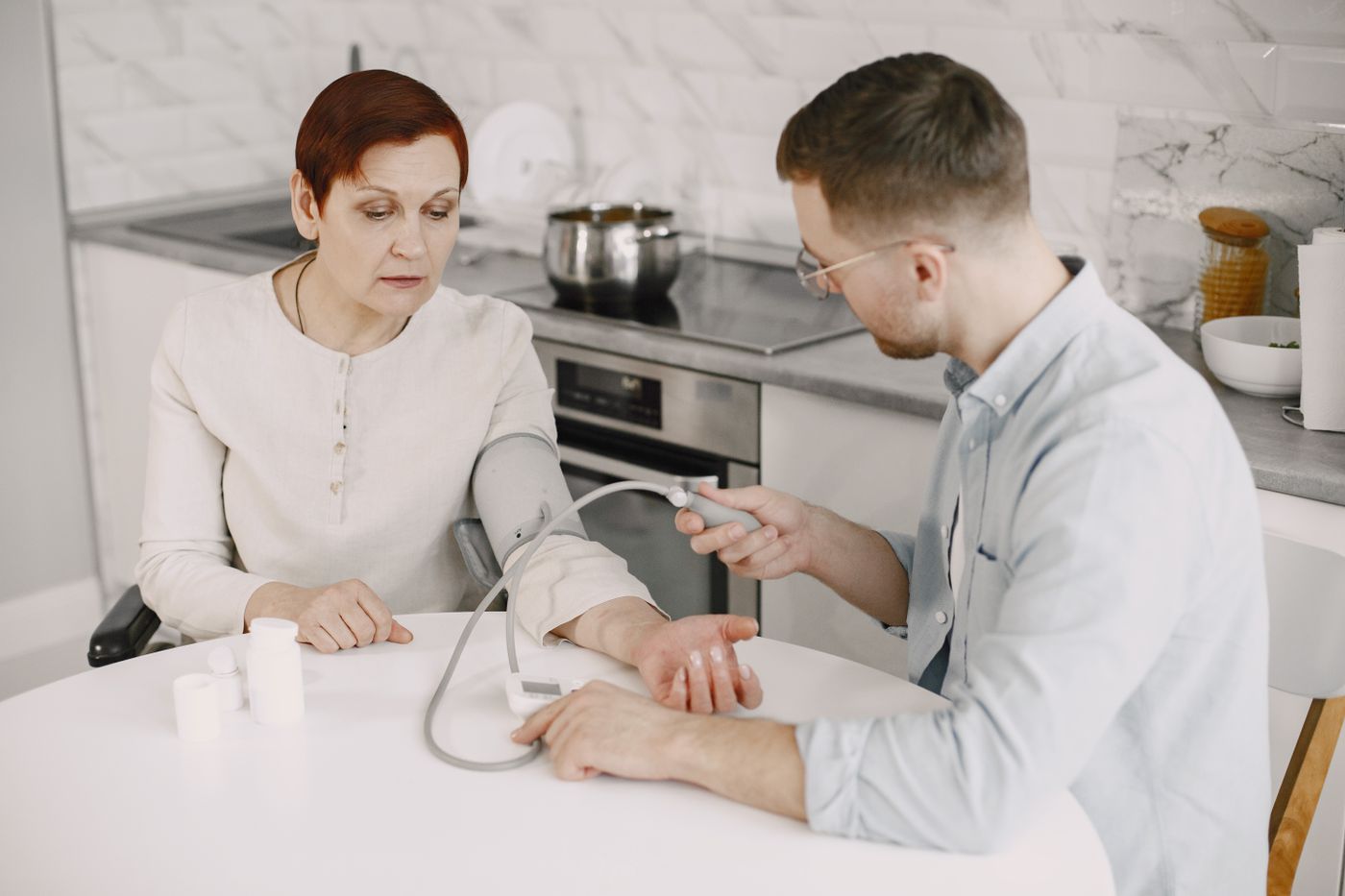
The buyer is running a simple test: "Will this give me a believable number without hurting, and can I show the record to my clinician?" Show a bare arm, the correct cuff size, the arm supported at heart level and the reading saved. Then show the record on a phone or in the device memory. The visual proof should come before the feature list.
Four buyers worth targeting first
The full report maps nine buyer groups. These four give you clear creative starting points, but they need different messages. Don't put a caregiver, a newly diagnosed buyer and a medication user in one generic ad.
The midlife-to-senior monitor
Usually in their 50s through mid-80s, they want home checks that feel simple and match what the clinic sees. Shaky hands and clinical equipment can make the routine feel intimidating.
Ad angle: show one button, a large display and a bare-arm reading. Put the numbers on screen while a person uses the monitor at a kitchen table.
The adult-child caregiver
They manage readings for an older parent or relative, sometimes from a distance. Their fear is mixing up two people's numbers or missing a routine.
Ad angle: show User A and User B memory, then a daughter handing the monitor to her father. Say the records stay separate, not that the device replaces care.
The too-low dipper
This buyer takes blood pressure medication and has felt dizzy, faint or unsteady when pressure drops. They want a clear record to discuss with their doctor.
Ad angle: show a low reading saved in the log after the person sits safely. Frame the monitor as feedback for a clinician, never as a reason to change medication alone.
The white-coat sufferer
Their reading rises in a clinic chair, while home numbers look different. They want calm, repeatable readings that help explain the pattern.
Ad angle: use a split screen of a clinic notebook and a quiet kitchen reading. Show several entries over time instead of declaring one number the truth.

The doubts to answer on camera
Each doubt below appeared in buyer research. A claim in your caption isn't enough. Film the answer so a viewer can see how the monitor fits, records and works when used alone.
| What the buyer thinks | What to show on camera |
|---|---|
| "Home monitors, especially wrist ones, can be wrong." | Show the upper-arm cuff, a validated-accuracy message and a clear reference to the device's certification or clinical calibration. |
| "The cuff will squeeze too hard or fit my arm badly." | Show a bare arm, the right-size cuff, gentle inflation and the fit guide placed beside the arm. |
| "I'll take a reading in the wrong position." | Show feet flat, back supported and the arm at heart level, with those steps appearing as simple on-screen prompts. |
| "I'll forget the numbers or mix up my parent's readings with mine." | Show separate User A and User B memory, then open the saved log with dates and readings visible. |
| "The app may fail, or I may not know how to use it." | Show the full start-to-finish flow with one hand. If no app is required, press once and show the display. If Bluetooth is included, show the reading arriving on the phone. |
Notice that the proof is specific. "Accurate" is a label. A correctly placed cuff, a posture guide and a saved reading let the viewer judge the process. Keep medication and treatment decisions with the buyer's clinician.
The moments that start a purchase
People rarely buy a monitor because they suddenly want another gadget. An outside event gives the purchase urgency. Put that event in the opening shot and let the product answer it.
- A doctor's instruction. The buyer leaves an appointment with a written request to log readings at home. Show the instruction beside the monitor and a simple daily entry.
- A dizzy spell. They feel lightheaded after standing or climbing stairs and want data about the moment. Show a safe seated check, then a separate standing check only if their clinician has instructed them to do so.
- An abnormal home reading. One unexpected number sends them searching for a credible comparison. Show the reading saved with its date, not a promise about what it means.
- A high clinic reading. Nerves push the number up and the buyer wants a calm home record. Show repeated entries over time in a clean log.
- A first diagnosis. The buyer doesn't know where to begin. Show three steps: sit, fit the cuff, press the button.

8 blood pressure ad hooks to test this week
These hooks are adapted from the buyer language in the full report. Pair each one with the visible proof from the doubts table. Avoid telling viewers what a reading means or suggesting they change treatment without a clinician.
"Why does your pressure spike the second you sit in that chair?"
Best for: white-coat concerns, with a calm home log on screen"I bought a monitor the night my mom fainted in the kitchen."
Best for: adult-child caregivers, with two-user memory shown"The cuff hurt so badly you braced. Show the fit before you trust the number."
Best for: cuff pain and sizing, with bare-arm placement"Dizzy every time you stand up? That's data your doctor needs."
Best for: position-related dizziness, with safe seated logging"Still scribbling readings on the back of a receipt?"
Best for: tracking chaos, with automatic memory or a clean phone log"Nobody warned me my blood pressure medicine could drop me to the floor."
Best for: too-low concerns, with a saved reading and clinician discussion"Two people, one machine, and zero mixed-up readings."
Best for: households sharing a monitor, with User A and User B memory"No app. No setup maze. Press once and read."
Best for: older or less tech-savvy buyers, with the full one-handed demoTest hooks in pairs that share one demonstration, so the message is the variable. A caregiver hook needs caregiver visuals. A cuff hook needs a close-up of fit and inflation. Keep the wording within what your product can prove.
Score your current blood pressure ad
Open your best-running ad and tick what it actually shows. Be strict: a claim in the caption doesn't count if the viewer never sees the process.
Your ad shows 0 of 6.
Fewer than four ticks? Each missing box leaves a trust question open. Start with the first missing proof, rather than adding another feature badge.
If your blood pressure ads are already running flat: what to do now
Don't respond by adding more specifications or making a stronger health claim. Work through these in order, one change at a time.
- Read the comments and DMs first. If people ask whether the cuff hurts, fits large arms or works without an app, your ad is raising a doubt it doesn't answer.
- Swap only the opening line. Replace a product-led opener with a doctor's instruction, dizzy spell or clinic-versus-home concern. Keep the same product demo.
- Add one technique shot. Film bare-arm placement, supported posture and a calm press of the button in the first five seconds.
- Split by buyer group. Make one version for caregivers and another for low-reading concerns or white-coat worries. Let each ad name one situation.
- Show the record. End with device memory, a phone trend or two separate users. Say the record supports a clinician conversation, not that it decides treatment.
A look inside a full AngleBrief report: personas, hooks and the angle test matrix.
FAQ
What should a blood pressure monitor ad show first?
Show the buyer's biggest concern being handled. For a caregiver, that may be separate memory. For a cuff-skeptical buyer, show bare-arm placement and comfortable inflation. For a white-coat concern, show a calm home log. The product beauty shot can come after.
Can I say the monitor is clinically accurate?
Only if the product has support for that wording and you can show the relevant validation or certification clearly. Keep the ad focused on the measurement process, and don't promise a diagnosis or treatment result.
Should I lead with Bluetooth or no app?
Match the buyer. Show a reading arriving on a phone for a tech-comfortable user. Show one-button, press-and-read operation for an older buyer who wants no downloads. Don't hide which workflow the product requires.
How should I advertise to people taking blood pressure medication?
Frame the monitor as a record they can bring to their clinician. Show a low or changing reading being saved, but don't tell viewers to stop or change medication. The treatment decision belongs with their doctor.
Where does this research come from?
From buyer conversations, searches, reviews and 1,899 competitor ads. The findings group recurring personas, doubts, triggers, buying criteria and hooks for blood pressure monitor advertising.
Running ads in a different niche? Browse all buyer reports or request research for your niche. You can also preview the Blood Pressure report before you buy.
Get the full Blood Pressure buyer report
All nine buyer groups with their ad angles, ranked pains, objections and triggers, the full hook set and the angle test matrix. You can brief your next creative round with buyer language instead of guessing.
Get the report · $24One-time payment · instant access · 7-day refund